Key Dates for 2025–2026
1 July 2025
Financial year starts
30 June 2026
Financial year ends
31 October 2026
Self-lodge deadline
Lodge via myTax (in myGov), a registered tax agent, or paper return. Using a tax agent before 31 October 2026 typically extends your deadline to May the following year.
Before You Start
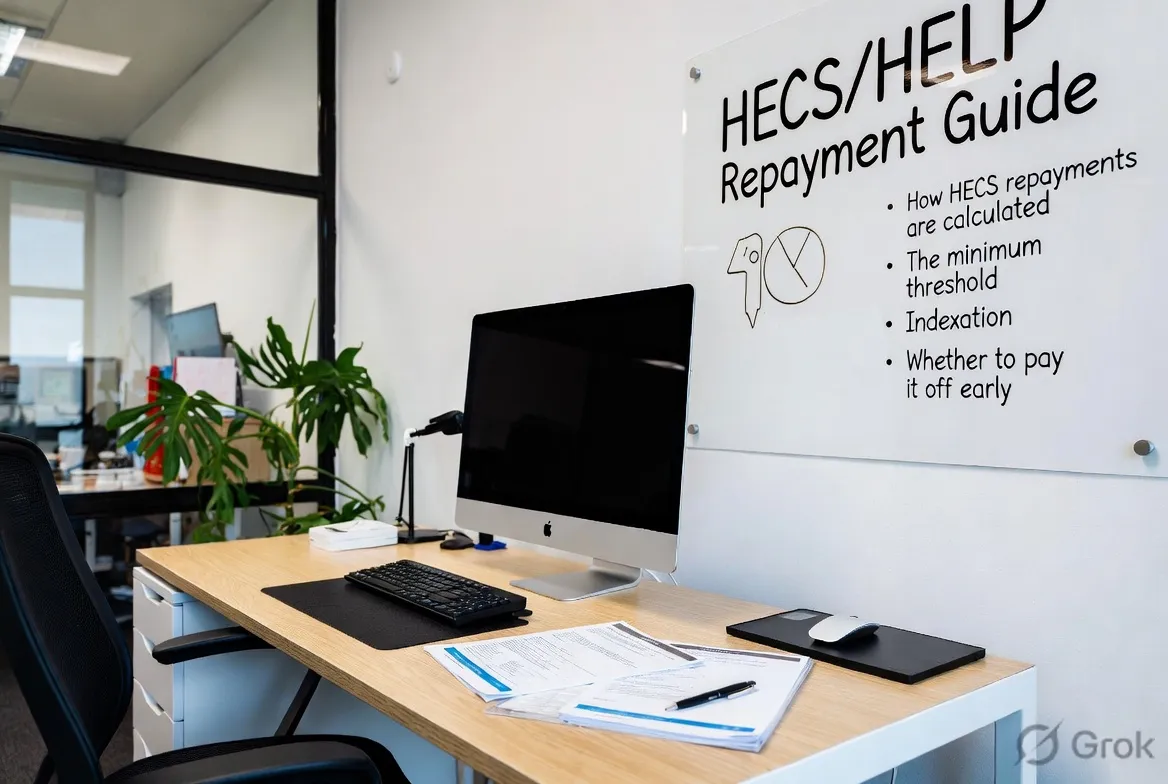
If your return includes capital gains, deductible super contributions, or study loan repayments, it helps to review the underlying rules first rather than relying on memory. The capital gains tax guide, super contributions guide, and HECS/HELP guide cover the areas most likely to trip people up.
If you are really trying to answer "am I getting a refund or a bill?", pair this checklist with the tax refund guide so the records you gather line up with the result you are expecting.
Log in to myGov and link to the ATO
Your income statement, government payments, and some investment income are pre-filled by the ATO. Check these are correct and complete.
Download your income statement from myGov
Confirm the amounts match your payslips. Report any discrepancies to your employer before lodging.
Gather paper or digital receipts
Sort by category: work expenses, charity donations, investment costs. For total claims under $300, written evidence may not be required, but you must still show you incurred the expense and how you worked out the claim.
Check your previous year return
Any capital losses carried forward, prior year tax debts, or offsetting amounts you may have missed.
Document Checklist
Items marked as "common" apply to most tax payers.
Income
- Employment income statements (from myGov — ATO pre-fills)
- Government allowances or payments (Centrelink payment summary)
- Interest income from bank accounts (bank statements or myGov)
- Dividend income and franking credits (broker statements or myGov)
- Rental income and expenses (see Rental section)
- Capital gains from shares, property, or crypto
- Business income (if sole trader or partnership)
- Foreign income (wages, pension, investments)
- Trust distributions (trustee tax statements)
- Employee share scheme (ESS) income
Work-Related Deductions
- Work from home hours log (for fixed rate method: 70c/hr)
- Home internet and phone — work-use portion
- Vehicle log book or km diary (if you drove for work)
- Receipts for tools, equipment, and professional gear
- Work uniforms and protective clothing (with laundry log)
- Self-education expenses (courses directly related to current job)
- Professional memberships and subscriptions
- Union fees (also on your income statement)
- Travel expenses for work conferences or training
- Home office equipment depreciation (if using actual cost method)
Personal Deductions
- Personal super contributions (if claiming a deduction — need Notice of Intent form)
- Income protection insurance premiums (if not bundled with super)
- Charitable donations $2+ (to DGR-registered charities)
- Cost of managing tax affairs (accounting fees for last year)
- Interest on investment loans (shares, property)
Investments
- Annual tax statement from broker (shows dividends, franking, cost base events)
- CGT report or trade history for shares sold or crypto converted
- Managed fund / ETF annual tax statement
- Purchase date and cost base records for any assets sold
- Records of capital losses carried forward from previous years
Rental Property
- Rental income (bank statements, property manager statement)
- Rental expenses: insurance, rates, strata, agent fees, repairs
- Interest on investment loan (mortgage statements)
- Depreciation schedule (from quantity surveyor)
- Capital works deductions (building allowance)
- Property manager's annual summary
Offsets and Government Benefits
- Private health insurance certificate (from your insurer)
- Spouse income details (if you are claiming spouse offset or super co-contribution)
- Zone or overseas forces tax offset documentation
- Franking credit offset (calculated from dividend statements)
Commonly Missed Deductions
Union fees
Often on your payment summary but easily overlooked when lodging.
Professional subscriptions
Journals, industry body fees, licensing fees directly related to your work.
Work-related books and training
Study or courses that maintain or improve skills for your current job.
Bank fees on investment accounts
Fees on accounts used to manage income-producing investments.
Charitable gifts via workplace giving
Often deducted at source — appears on your income statement.
Income protection premiums (outside super)
If you pay this personally (not from super), the full premium is deductible.
Tax agent fees from last year
The cost of preparing last year's return is deductible in this year's return.
Phone bill work-use portion
Keep a 4-week diary of work vs personal calls/data to establish a percentage.
Frequently Asked Questions
When is the tax return deadline in Australia?
The standard deadline for self-lodging is 31 October 2026. If you use a registered tax agent, the deadline is typically extended — often to May or June of the following year. You must engage a tax agent before 31 October 2026 to access the extension.
What is a PAYG Payment Summary (Income Statement)?
Your employer reports your income and tax withheld to the ATO. This now appears as an 'Income Statement' in myGov (ATO online). You no longer receive a paper group certificate. The ATO pre-fills this in your return, but you should verify the amounts match your own records.
Can I claim work-from-home expenses?
Yes. The ATO's revised fixed rate method allows you to claim 70 cents per hour worked from home, covering electricity, internet, phone, and computer consumables. Alternatively, you can use the actual cost method with full records. You can no longer use the temporary shortcut method (80 cents/hour) that applied during COVID.
What records do I need for work-related deductions?
For claims totalling $300 or more, you need written evidence (receipts or invoices). For total claims under $300, written evidence (receipts) may not be required, but you must still be able to show you incurred the expense and how you worked out the claim. You must keep records for 5 years from the date you lodge your return.
Do I need to report my super contributions?
Compulsory employer super contributions are not included in your taxable income. However, you should report personal deductible contributions (if you've lodged a notice of intent to claim), and the ATO uses your contribution details for Division 293 assessments (if your income + super > $250,000).
What if I received a government payment?
Most Centrelink payments (JobSeeker, Parenting Payment, Age Pension) are taxable income and must be included. Services Australia provides payment summaries in myGov. Youth Allowance and Austudy are also taxable. Tax-free payments (some child care, family payments) are not included.